Pillar 01
An economy that benefits the local area
Processing resources locally, financing essential services and sharing the benefits where they exist.
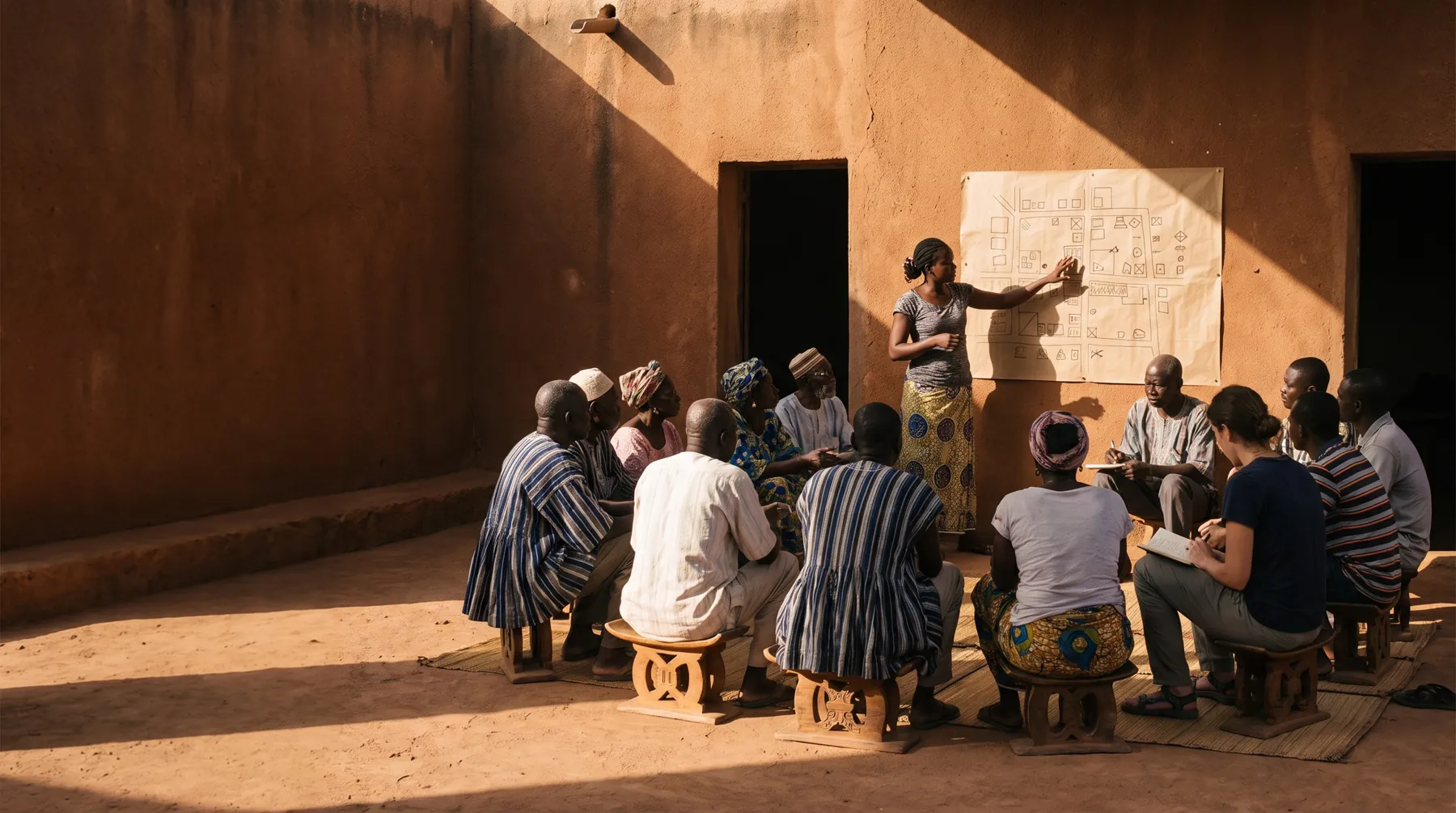
Vision · A project for society
NOVASCEND explores, with African regions and communities, another way of linking value creation, freedom of activity, shared decisions and the passing on of stories. The aim is not only to build cities: it is to give their residents more possibilities, more rights and more power over their future.
What drives us
Beyond technological innovation and economic power, NOVASCEND carries a humanist ambition: to contribute to a fairer, more inclusive and more sustainable world, where progress serves humanity, wealth is shared and everyone can flourish with dignity. Through its youth, its diversity and its capacity to reinvent models of development, Africa is far more than a continent of opportunity: it can be one of the drivers of a new global paradigm, founded on solidarity, autonomy and collective prosperity.
The history of humanity is not that of a single individual, a single people or a single nation. It is a collective work, built across generations, civilisations, cultures and bodies of knowledge, in which every individual, every community and every generation writes a page. NOVASCEND wishes to continue this construction with a universal and humanist vision grounded in solidarity, in which our differences are not borders but riches that unite us: whatever our origins, beliefs or horizons, we share one humanity and a common destiny.
Our measure of progress
True progress is measured not by the success of a few, but by our collective ability to build a better future for all and for generations to come.
The overall ambition
The vision rests on four pillars, developed one by one below: value created locally, freedom of activity, residents’ power of decision and control of their own narrative.
Processing resources locally, financing essential services and sharing the benefits where they exist.
Widening everyone’s choices: to hold a decent job, start a business, learn, pass on knowledge or care for others.
Giving citizens a real place in setting priorities, monitoring results and scrutinising decisions.
Enabling Africans to document, pass on and tell their own stories and initiatives themselves.
What is changing today
Until now, it was a statement of intent; today, we can show that it is feasible.
Promises that can be tested. Freedom, participation, sharing: these ideals have often been proclaimed without any way of verifying their implementation. Simulations, open data and public registers now make it possible to test their feasibility before committing, then to follow with residents whether commitments are kept.
Making community life meaningful. Organising collective life is not enough: it must also make people want to take part. NOVASCEND seeks to build on the solidarities that already exist in local communities and to make participation a choice. People help, pass on knowledge and care because community life means something to them, not because they are compelled.
NOVASCEND research calls this orientation “distributed prosperity”: growth only makes sense if it improves daily life, widens capabilities and strengthens residents’ autonomy.
A principle common to the four pillars
These rules cannot be imported ready-made: they are built with the residents and institutions of the places concerned.
This economy of circular sovereignty draws on the model presented by WAGAS Group, which links resources, industry, energy, the city and services. NOVASCEND research explores how this chain could also open lasting rights and benefits to communities.
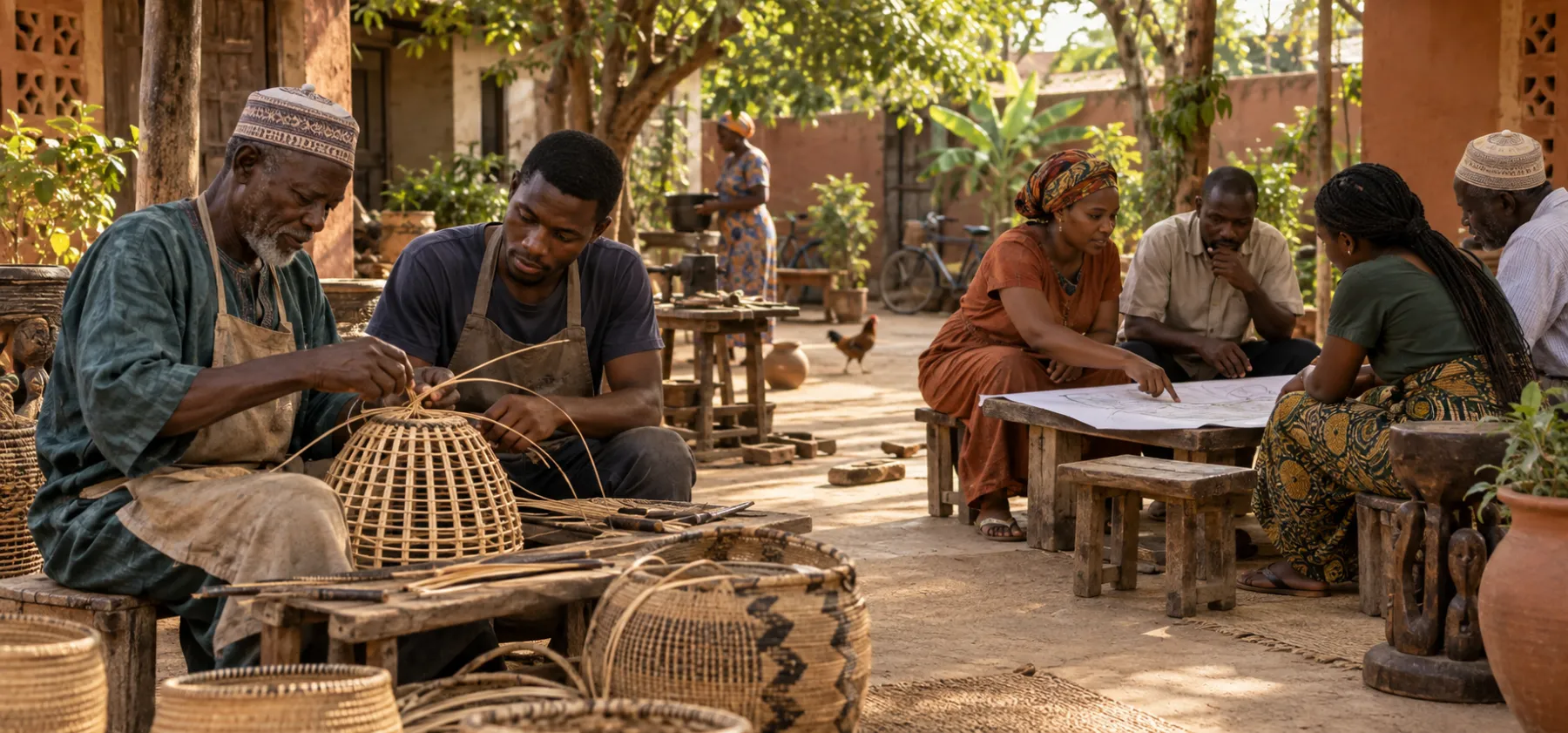
Produce locally from local resources and know-how, beyond extraction or raw export.
Providing reliable energy and useful infrastructure to serve businesses, homes and residents. No single source is enough: each local area would combine solar, wind, hydro, biomass or geothermal according to its resources and its choices. Read the energy approach.
Finance health, education, mobility, training and community facilities through the activity created.
Provide for community assets and reinvest the available surplus; a dividend remains conditional.
This proposal combines several forms of ownership: private investors, public authorities, cooperatives and a community vehicle. The research paper envisages a Community Prosperity Fund, separate from WAGAS and subject to independent oversight, to hold certain rights over productive assets and finance collective benefits.
The community dividend remains a hypothesis, variable and conditional. It could only be calculated after operating costs, maintenance, taxes, debt and necessary reserves. Essential services and existing rights must not depend on a promise of future returns.
Go further on this pillar
Circular sovereignty applied to energy: complementary sources, resilient grids, value that stays in the local area. Read about sustainable mixed energy →
NOVASCEND imagines a society in which living with dignity would depend less on income from work. The ambition is to give everyone the means to choose their activities, change course and have time to live, learn, create and contribute.
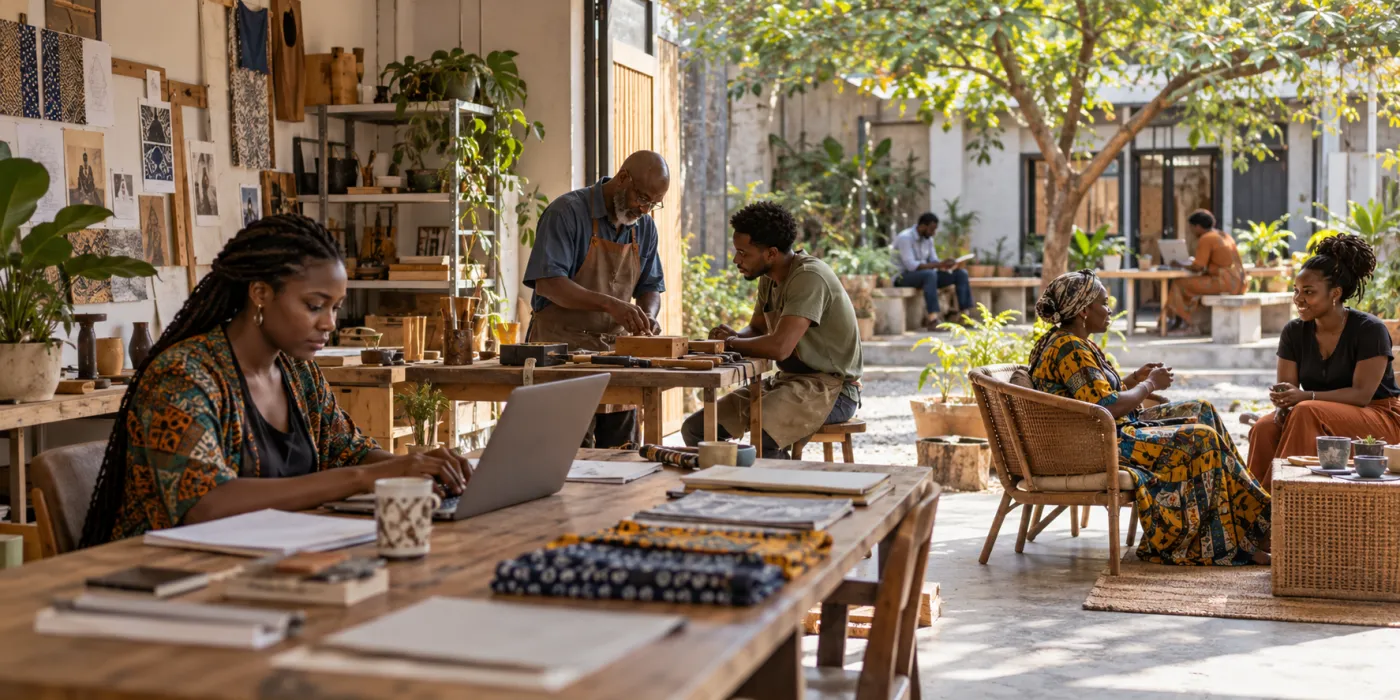
This change goes beyond vocabulary. Activity includes salaried employment, entrepreneurship and production, but also care, passing on knowledge, research, culture and civic engagement. These activities may or may not be paid; all can contribute to collective life. Rest and time for oneself also have their place, without needing to be justified by their economic usefulness.
Artificial intelligence and robotics can transform occupations and certain tasks, create new activities and, in some cases, increase productivity. Their adoption, however, produces neither free time nor shared prosperity automatically. According to the International Labour Organization, exposure to generative AI more often means a transformation of jobs than their disappearance. The question therefore becomes: who decides on its uses, and who benefits from any gains?
The proposed horizon
We no longer work to survive; we live to contribute to the common good.
No longer defined by a job title. Over a lifetime, the same person might build houses, write code, provide care, teach or do research, according to their wishes, the city’s needs and the training open to them. What defines them is no longer a “job” or an “occupation”, but the activities they choose and what they bring to others.
Changing one’s relationship to activity. Changing course would become an ordinary path, supported by lifelong learning and by tools, including AI, that help acquire new skills. This mobility must not become an obligation: everyone keeps the right to stay in a trade they love, to slow down or to rest.
Generated concept illustrations · Imagined scenes, not photographs
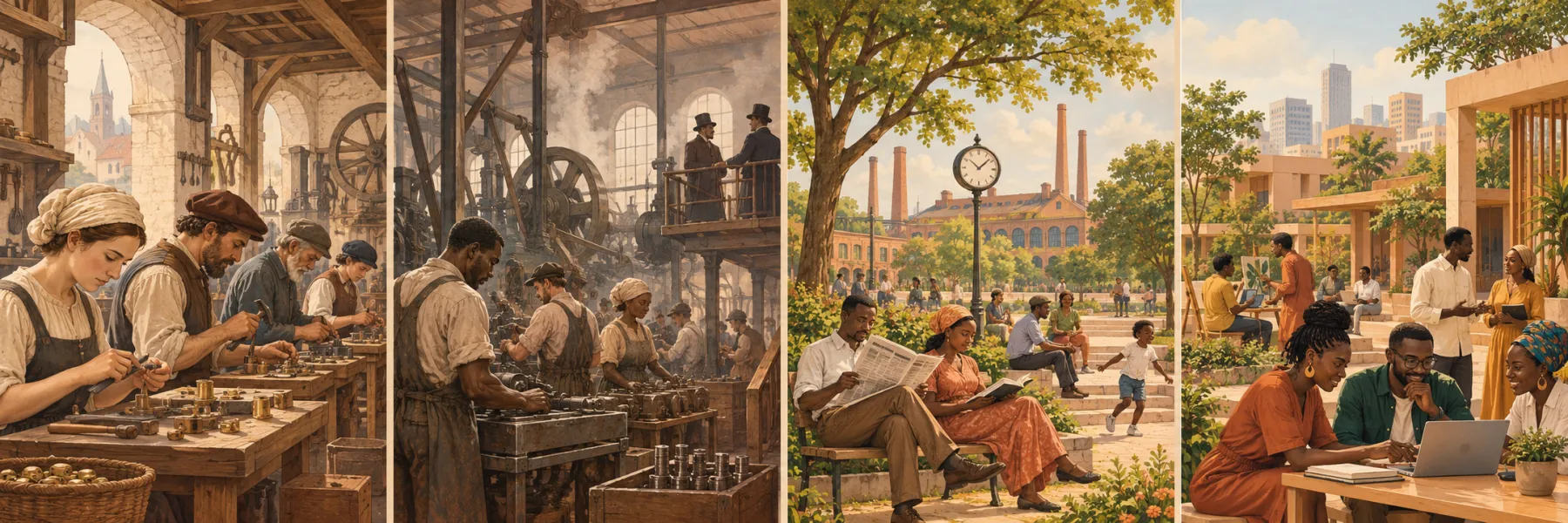
1776 · Adam Smith
The division of labour makes it possible to increase productivity. It also raises the question of each person’s place in increasingly specialised production. The Wealth of Nations ↗
1867 · Karl Marx
The analysis of wage labour leads to questioning the ownership of the means of production and the distribution of the wealth created. Capital ↗
1930–1936 · John Maynard Keynes
Keynes links employment to demand and considers that greater productivity could also free up time. This possibility remains a collective choice, not an automatic consequence. The General Theory ↗ · Economic Possibilities for our Grandchildren ↗
Proposal · NOVASCEND
Widening everyone’s choices by linking access to essential services, sharing of value and assets, and available time.
Points of reference · These authors do not endorse the NOVASCEND proposal
In the Muqaddima, he links the division of labour to the cohesion of a society and sees work as the source of income. Four centuries before Adam Smith, this question was already being asked from the Maghreb. Muqaddima ↗
She distinguishes labour (which meets the needs of life), work (which builds a lasting world) and action (which engages with others). A conception of activity broader than employment. The Human Condition ↗
Ujamaa, “familyhood” in Swahili, proposes a form of community solidarity conceived from an African standpoint. Adopted in 1967 as Tanzania’s development strategy, it was abandoned in the late 1970s for lack of economic results: a lesson for any proposal of this kind. Ujamaa, yesterday and today ↗
She studies communities that manage common resources themselves, through rules they set for themselves, without relying solely on the state or the market. A point of reference for community assets. Governing the Commons ↗
Development is judged by the expansion of people’s real freedoms and “capabilities”, beyond income. It is the same criterion as freedom of activity. Development as Freedom ↗
In Afrotopia, the economist and philosopher calls for an African utopian thought that reinvents itself in the 21st century from its own references. Afrotopia, English edition ↗
NOVASCEND takes up these questions in the age of AI: how to produce, who owns the assets, and how can the gains translate into material security and chosen time for residents?
Organise access to essential services and strengthen social rights so that dignity does not depend on a measured contribution or on a particular job. These mechanisms do not replace public obligations. They draw on locally created activity (pillar 01) and must not depend on a future dividend.
The research envisages community stakes in productive assets, alongside public, private and cooperative stakeholders. Their income could finance services and, if a real surplus allows, a variable dividend. The rules, accounts and oversight remain to be defined and verified.
If AI and other investments improve productivity, their benefits could support incomes, training and, through negotiated choices, more available time. Everyone could pursue several activities, change them or rest, without being required to prove their usefulness.
The transition keeps a place for paid jobs and for the incomes of producers and independent workers. It must protect wages, safety, trade-union rights and social protection; voluntary activity does not replace a job that ought to be paid.
This freedom is a proposed direction, to be built with the residents and institutions of each place. It requires resources, enforceable rights and shared decision-making. No one should be scored on their activities or lose access to their rights because they do not contribute according to an imposed norm.
Collective life cannot be run from a platform. NOVASCEND envisages spaces where residents, local authorities and businesses can set priorities, weigh their interests against one another and scrutinise the choices that bind their community.
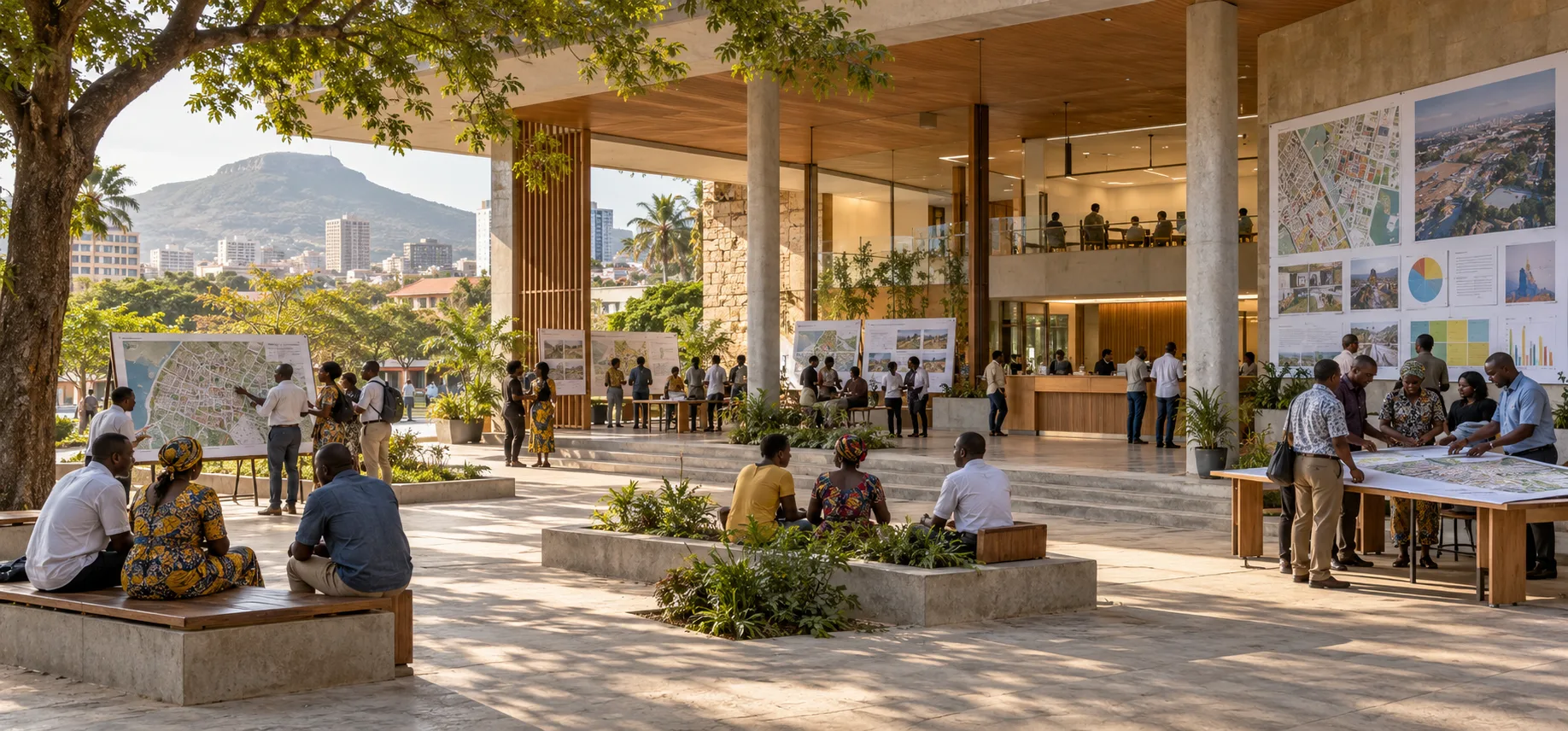
Make projects, their costs and their alternatives accessible before decisions are taken, with forms of participation that go beyond digital channels.
Give residents a place in monitoring services and the use of common resources, without replacing democratic institutions.
Publish results, make those responsible identifiable and provide for redress when a service or decision infringes rights.
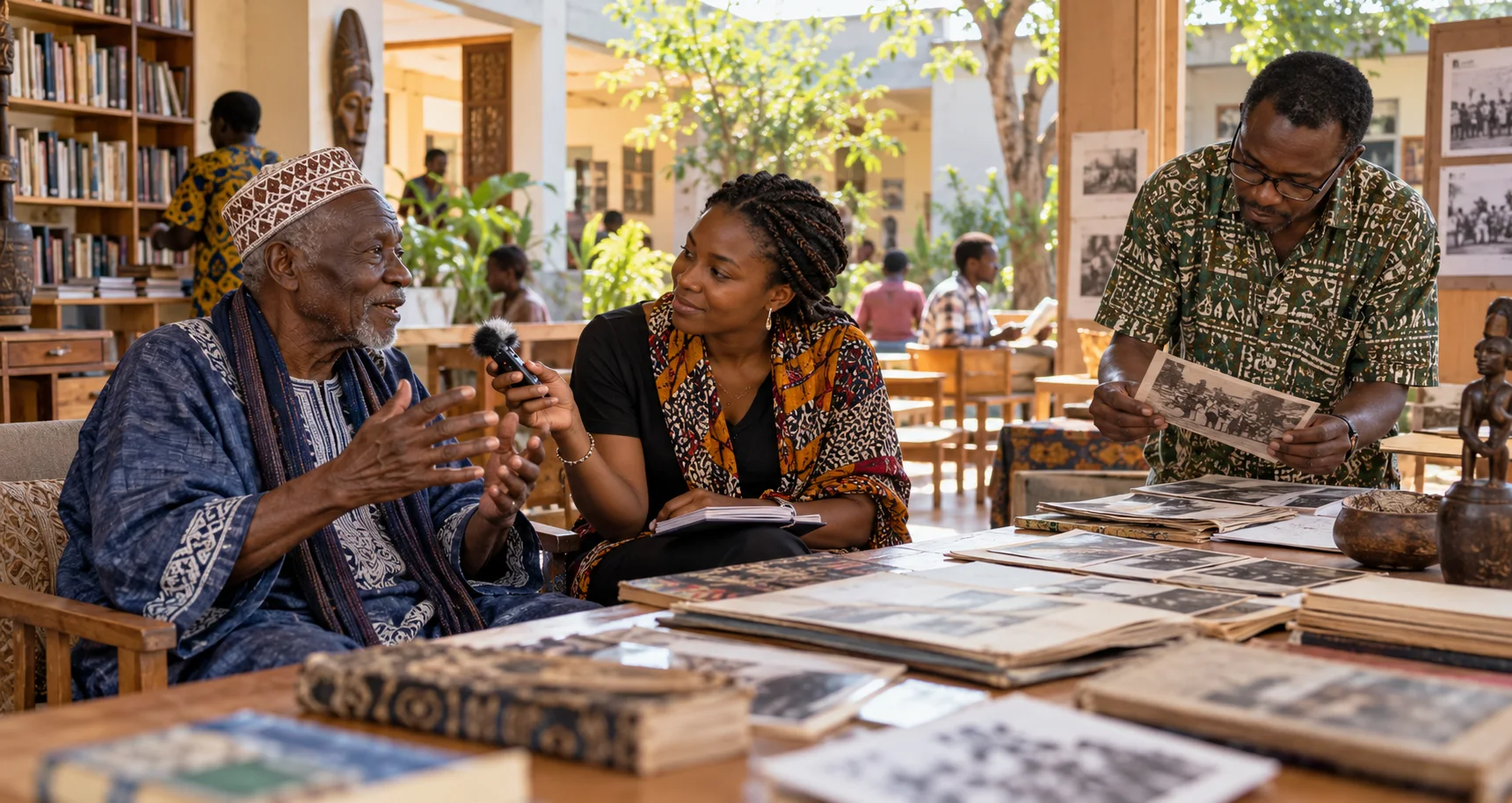
Deciding one’s future also means being able to tell one’s story. The General History of Africa, led by UNESCO, presents the continent from African perspectives. NOVASCEND wishes to contribute to this horizon by giving residents, researchers, artists and communities the means to document and pass on their narratives, in their own languages and on their own terms.
4.1
Document places, languages and memories with the people concerned; gather testimonies with consent, attribution and the right of correction.
4.2
Keep this knowledge alive in learning, libraries, workshops and public spaces, with accessible media and exchanges between generations.
4.3
Enable residents to tell the story of their initiatives and to decide locally how archives, their image and their contributions are used.
This ambition remains to be built with cultural and educational stakeholders and with residents. It assumes neither an already deployed programme nor a partnership with UNESCO.
In service of the four pillars · Digital tools and rights
A smart city is not defined by its tools alone: they are only means in service of the four pillars. The NOVASCEND platform is envisaged to connect energy, health, logistics, training and citizen services. Decision-support tools remain to be designed and submitted to public scrutiny.
Several entry points to the same service. The envisaged journeys should work by SMS or USSD on a basic phone, by voice message and with in-person assistance. The smartphone may be an additional channel, never a condition of access.
These tools take shape in the new urban model: eight families of microservices, city-scale scenarios and one design principle, that no one should be excluded by their equipment. The conditions to meet before presenting any of them as established are gathered on the Principles and safeguards page.
Services
Reliable information could help identify power cuts, difficulties in accessing care or training needs, and then adapt services with residents and the competent institutions.
Decision
Simulations could inform trade-offs between housing, mobility, health or productive investment. Assumptions, costs and limits should be published; the decision would remain human, debated and open to scrutiny.
Rights
Personal data should be minimised and protected. Residents should be able to access services without depending on a single app, to challenge a decision and to retain control of their data.