Capabilities
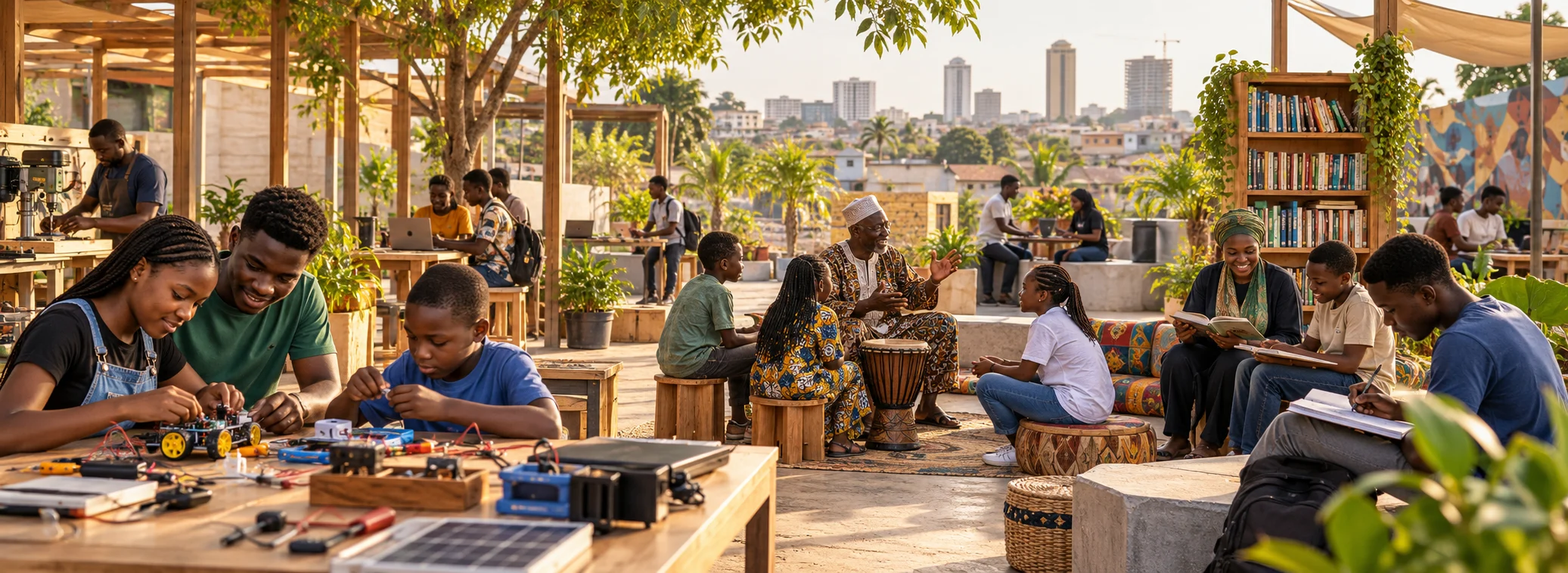
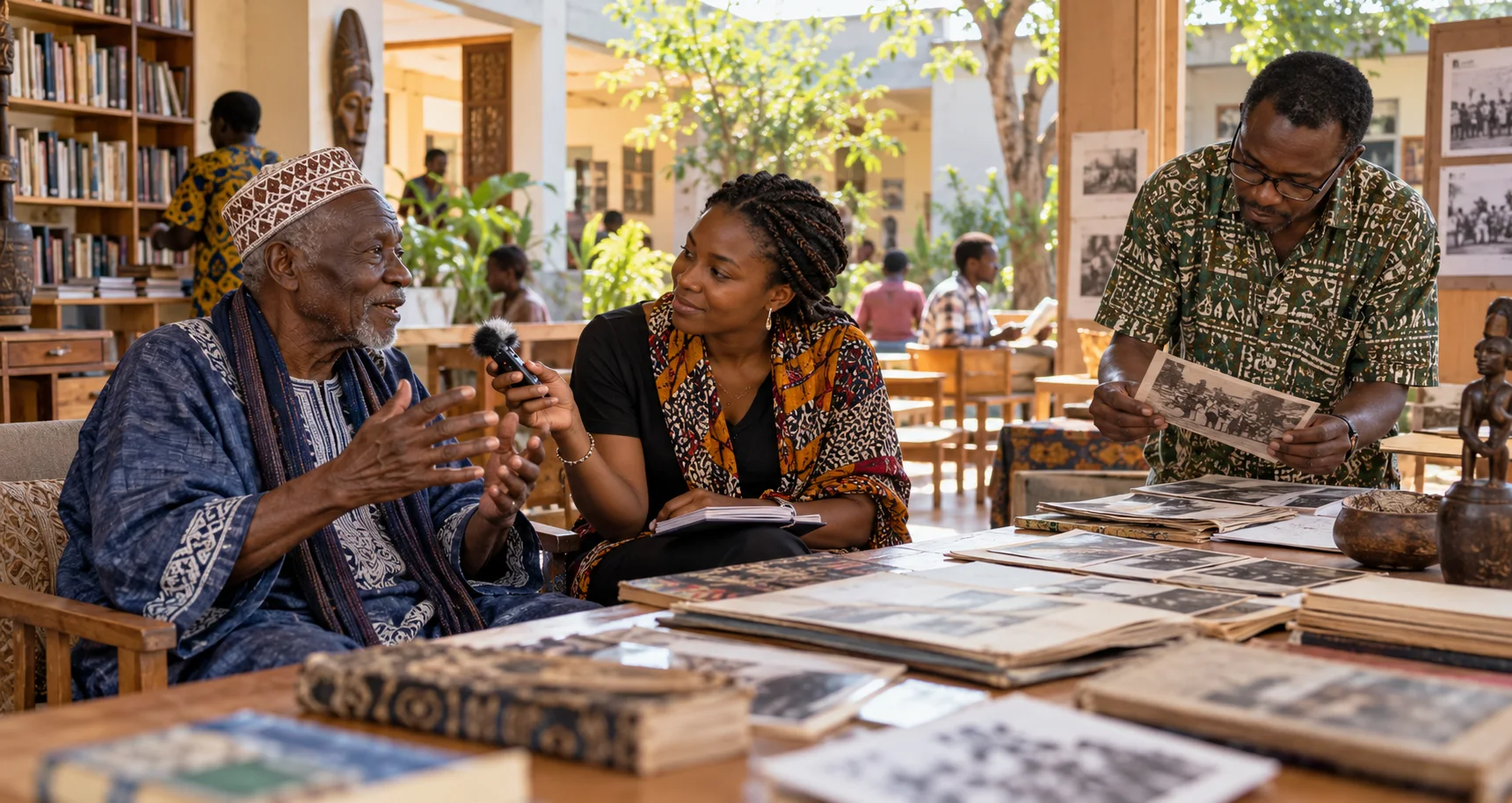
Education, culture and science
Places for learning, creation and science engagement, open to several generations and connected to neighbourhood concerns.
New urban model · The vision takes shape
For NOVASCEND, connecting a city means linking residents, neighbourhoods, services and institutions, with or without screens. These links aim to strengthen citizenship, social justice and well-being, while supporting local activity and responsible use of resources.
From plans to everyday life
To move from ambition to a lived-in city, NOVASCEND links four scales: the needs of residents, the places and networks that meet them, the microservices that support journeys, and the teams that deliver the service over time. The map, catalogue and scenes that follow illustrate this target vision. Its effects will need to be verified with residents and local partners.
The city day to day
Learning opens possibilities for starting a business; participating helps identify needs; experimenting can turn an idea into a useful solution.
Capabilities
Places for learning, creation and science engagement, open to several generations and connected to neighbourhood concerns.
Activity
Spaces to prototype, repair, produce, cooperate and develop income-generating activities.
Decision
Mechanisms to propose, debate, decide and follow the transformation of shared spaces and services.
Ties
Opportunities for passing on knowledge, mutual aid and participation adapted to everyone’s age, situation and abilities.
Resources
Producing and storing energy locally, reducing waste, repairing, reusing, preserving soil and water, and studying the real effects of the solutions adopted.
Quality of life
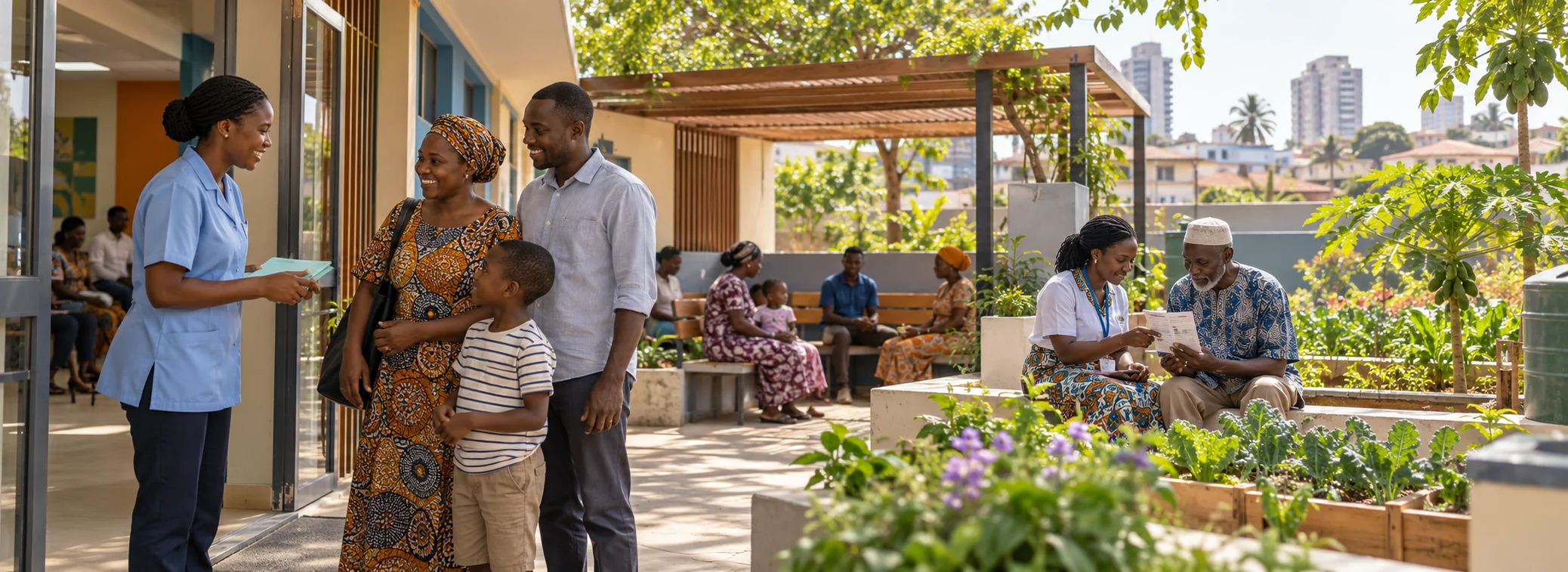
Improving access to services, travel and meeting places, with attention to safety and well-being.
Beneath the services
The envisaged urban project would be grounded in everyday uses and in the local area: digital tools would support this organisation, without replacing it.
Starting pointA need expressed in the neighbourhood
Link housing, activities, facilities and green spaces, taking account of land rights and climate risks.
Plan water, energy, transport and telecommunications together to make services accessible and reliable.
Define who maintains, who intervenes, who verifies, and how residents are informed and can make their needs heard.
Response to be testedA service that is accessible and followed over time
From project to service delivered
With each cycle, decisions and trials with users can change the project.
Forward-looking scenarios
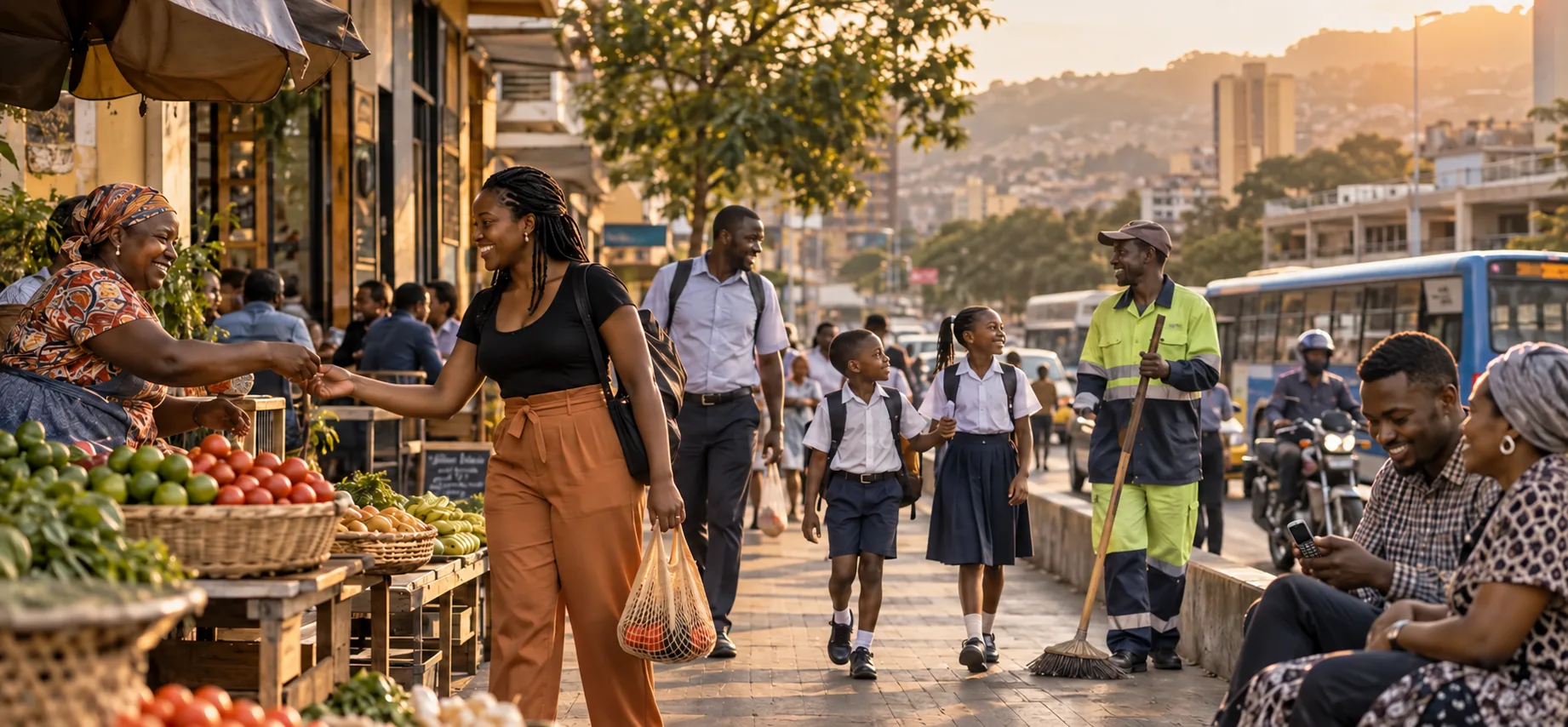
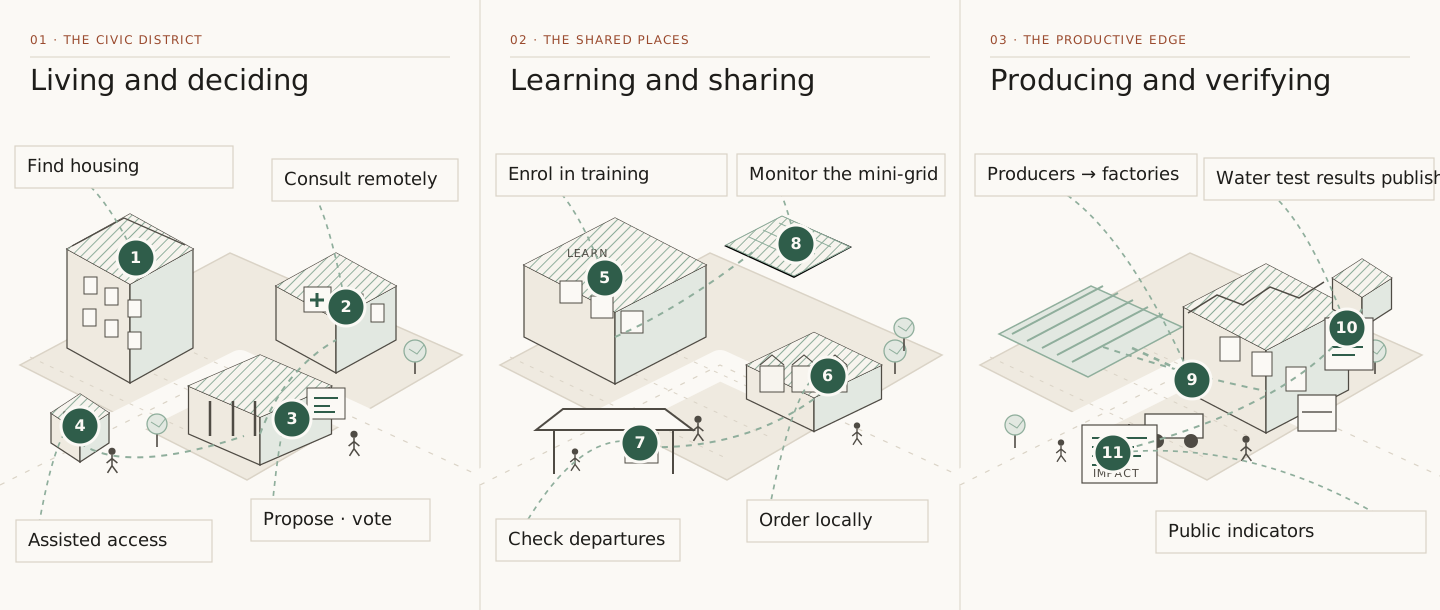
The fictional map locates 24 microservices chosen from the target catalogue, three per family, along with five facilities cited in the P4 operating model: urban operations centre, electrical substation, drinking-water treatment plant, wastewater treatment plant and sorting centre. The “Scenarios” menu follows eight journeys between residents, teams and facilities; the seven illustrated scenes below show the places where these journeys unfold, and two uses that the map does not yet cover. Buildings and their locations remain illustrative; the P4 documents are drafts still to be validated.
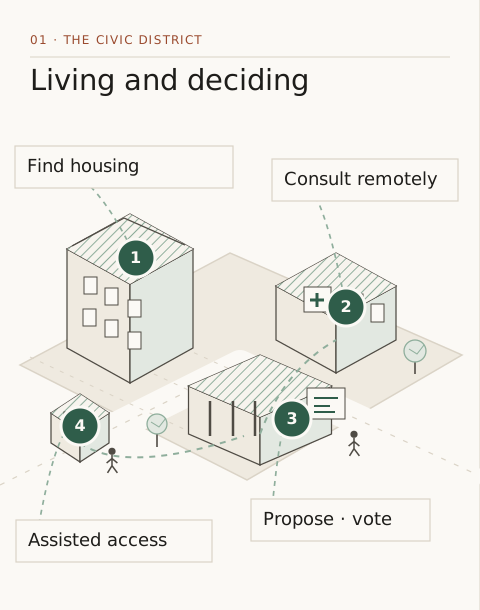
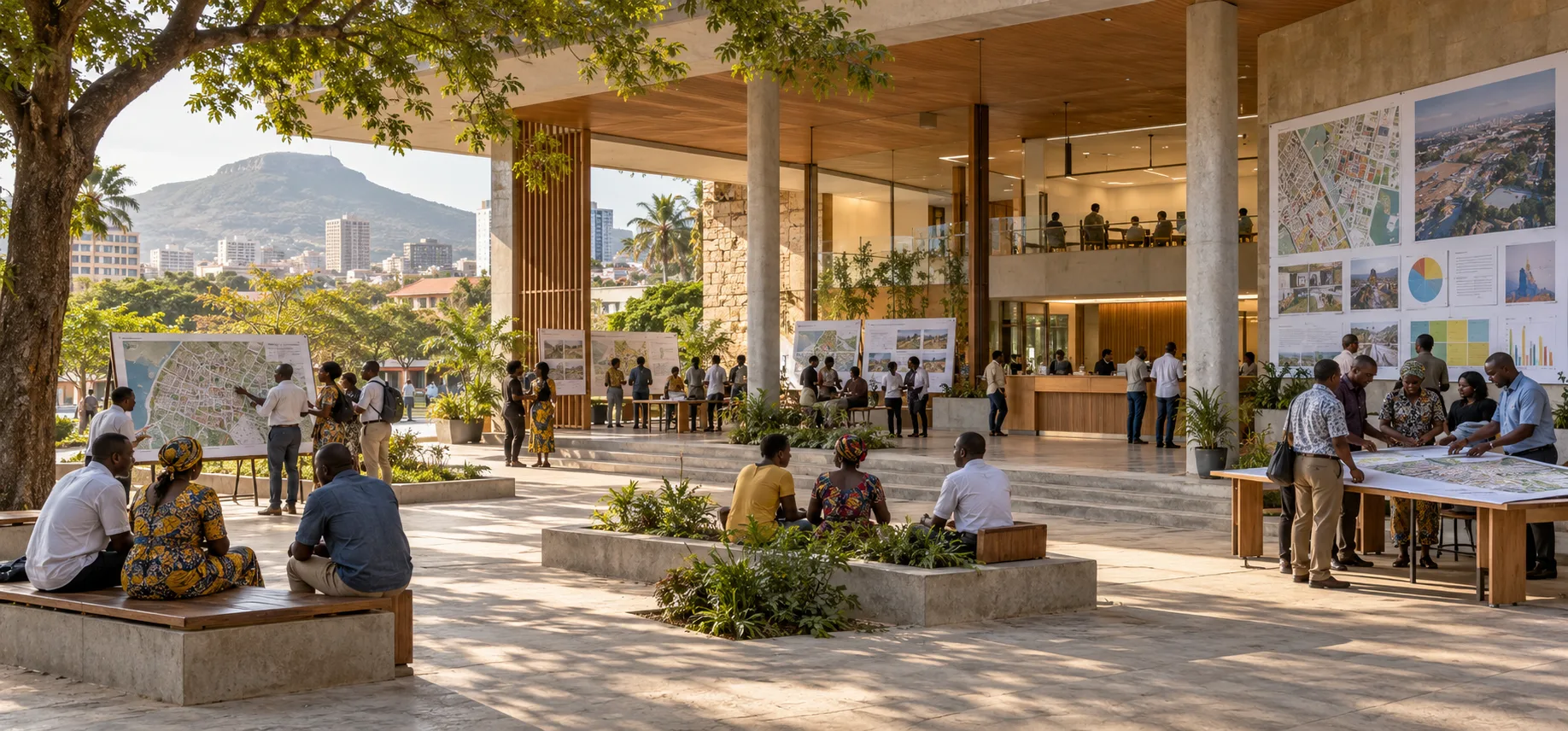
01 · The civic district
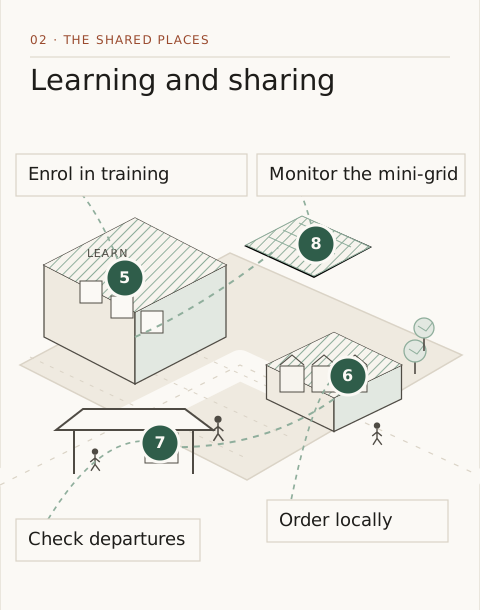
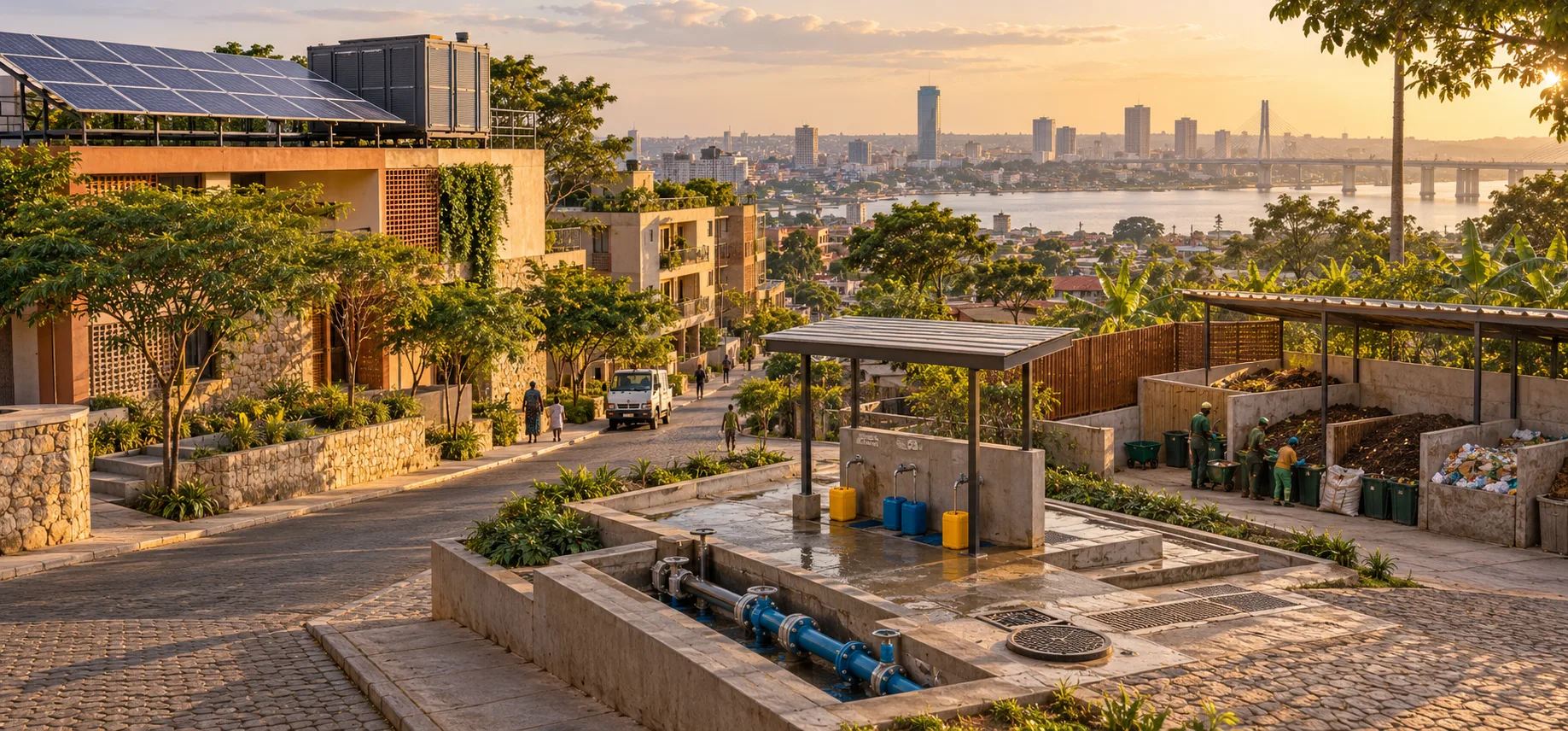
02 · The shared places
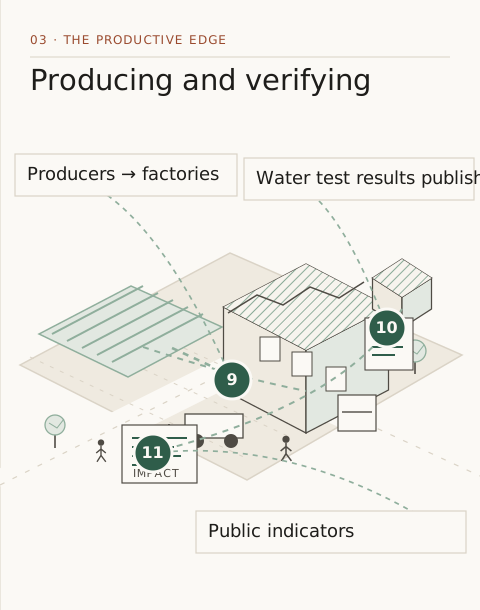
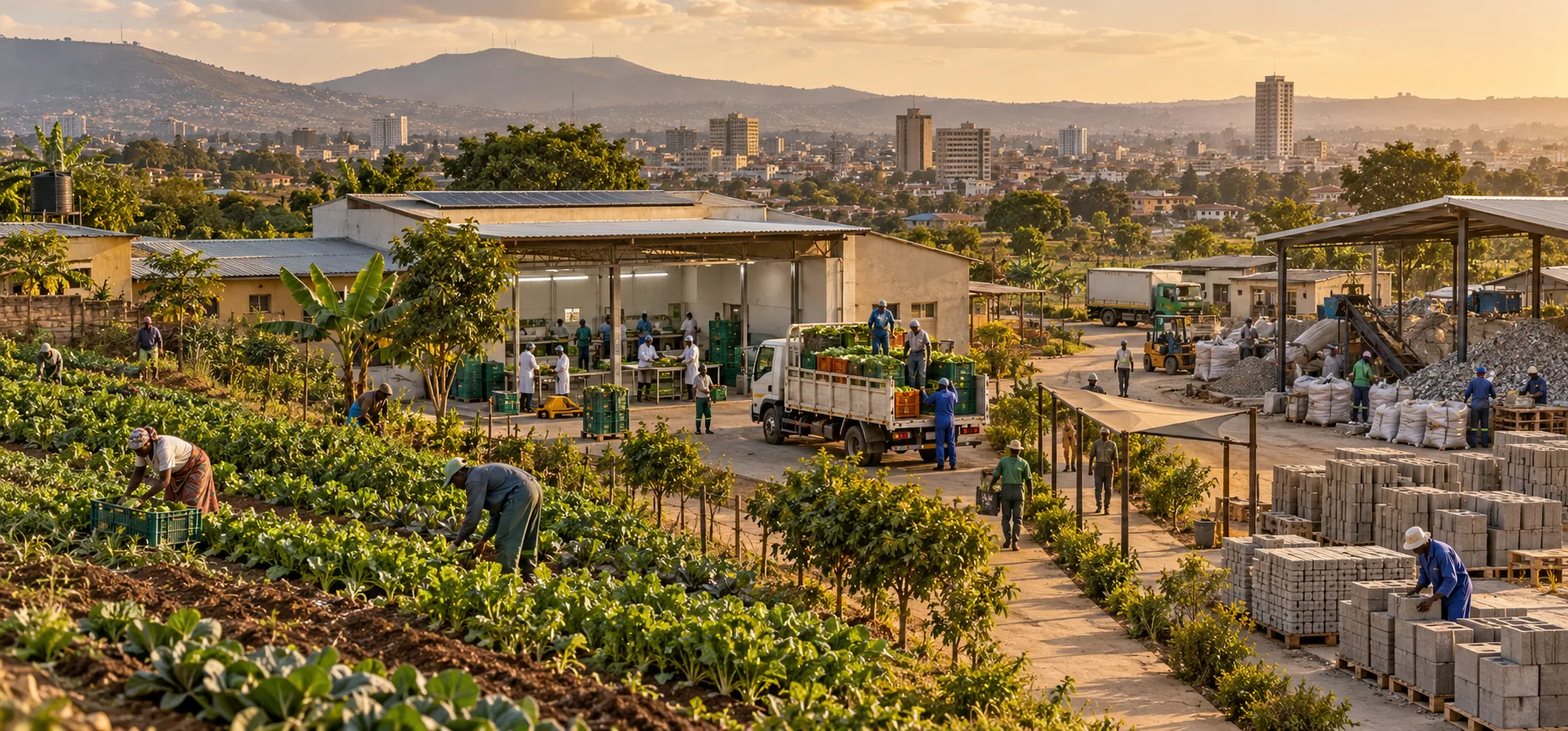
03 · The productive edge
The interactive map places them in a fictional city. This list remains available if the map does not load.
The titles follow the wording of the catalogue (in French) where it exists; “Programmes for startups and talent” is an editorial title. The places, links and uses shown in the image are siting hypotheses. A service’s presence on the map does not mean it already has a validated operating procedure. The catalogue measures neither deployment nor usage.
The microservice inventory
The new target catalogue brings together 1,355 entries. Of these, 923 services for the public and partners are presented in eight editorial families; 432 other entries concern, among other things, the foundation layer, operations and management. The areas and percentages relate only to the 923 services visualised. No figure measures actual deployment or use.
Back to the map of the twenty-four services ↑
The quantified breakdown is temporarily unavailable. The service families are still presented below.
01 · Life journeys
Easing arrival, access to housing, administrative procedures and important moments in life.
Examples: residence, settling in, housing, documents and personal services.
02 · Well-being
Linking prevention, care, safety and support for individuals and families.
Examples: health, emergencies, social protection, nutrition and services for carers.
03 · Knowledge and creation
Opening access to knowledge, cultural practices and skills throughout life.
Examples: education, culture, science, training and technology transfer.
04 · Local activity
Supporting the shops, entrepreneurs and services that keep the local economy alive.
Examples: local commerce, business services, suppliers and employment.
05 · Production and trade
Connecting places of production, value chains, infrastructure and mobility.
Examples: industrial value chains, construction, transport, agriculture and export.
06 · Common resources
Improving the collective management of resources and reducing pressure on ecosystems.
Examples: energy, water, waste, buildings, climate and circular economy.
07 · Institutions and rights
Making public services more accessible, supporting participation and protecting rights.
Examples: e-government, civic governance, justice, inclusion and public information.
08 · Cooperation and trust
Getting stakeholders to cooperate, mobilising funding and making commitments verifiable.
Examples: finance, data, partners, regulators and independent auditors.
To explore next
Hover over a marker to display the description of the service it illustrates. On a keyboard, use Tab; on a touch screen, tap the marker.
Generated concept images, not photographs. The markers illustrate uses, places or facilities associated with the catalogue’s services; they do not designate people or objects as microservices. A marker may also refer to a scenario on the map. Catalogue titles and identifiers appear beneath each scene. No service is presented as already deployed.
Day-to-day operation
When Amina’s tap stops running, her report reaches the urban operations centre. The team checks the supply from the water treatment plant, locates the faulty pipe and organises the repair. This forward-looking example simplifies operating procedures that are still in draft.
Forward-looking example · Water outage · draft
The tap has stopped running. Amina reports the fault at the service desk, by telephone or online. The operations centre receives her case; a sensor may also confirm the drop in pressure.
The team checks that the treatment plant is still supplying the network. Pressure readings then help locate the faulty pipe.
The centre passes on the area to be checked. Field staff secure the site, confirm the diagnosis and repair the pipe.
Monitoring shows that pressure has returned; Amina confirms that water is flowing at home again.
The cause and the works are explained. If the fault recurs, Amina can reopen her case without starting from scratch.
If the problem persists, a resident or the operator can reopen the follow-up.
Intended effects
The effects will depend on design choices, local partnerships and real access to services. The vision sets a direction; it does not prejudge the results.
Simpler journeys between housing, health, learning, mobility and administrative procedures; more opportunities to take part and to access services close to home.
More direct links between skills, shops, entrepreneurs, suppliers and places of production, in order to support activity and value creation in local areas.
Services designed to monitor resources more closely, prevent waste, repair and reuse, and then measure the effects of the choices made. Neighbourhood microgrids, storage and back-up to keep services running despite variations in the sources; see sustainable mixed energy.
Clearer cooperation between residents, local authorities, organisations and businesses, with responsibilities and results that can be tracked.
Evaluation to be developed
Questions for defining future indicators with local stakeholders.
Continuity of water and energy supply.
Incident handling time.
Local jobs and purchasing.
Consumption of water, energy and materials.
Feedback gathered and action taken.
Indicators under consideration: their definitions, baseline values and results remain to be established with local stakeholders. They could be the subject of a public report.
A distributed city
The facilities below are proposals. Their form, funding and location will need to be defined with residents and the relevant partners.
Turning an idea into a prototype with accessible tools, skills and materials.
Residents and professionals could test a service, give their opinion in their own language, and then see what was changed before any extension.
Linking culture, science, training and passing knowledge between generations.
Making residents’ proposals visible and organising deliberation.
Design principle
The smartphone can give access to some services, but it cannot be the only way in. Access routes will also need to be designed for people with limited connectivity or little familiarity with digital technology.
Places and facilitators in neighbourhoods for learning, making proposals and accessing services.
A lightweight web application, possibly usable offline for certain functions, could be studied.
SMS, USSD or voice could be considered where they match real usage and technical constraints.
Conditions of trust
The design should also protect land rights and personal data, anticipate climate risks, regulate sensors and surveillance, and provide for means of redress. The rules, those responsible and the checks would remain to be defined with the stakeholders concerned.
From place to trajectory
What matters is not that a neighbourhood has a workshop or a platform. What matters is what a person can learn, create and change thanks to them.